
Historical information - originally published 2025-02-25. This article records a luxury-development outlook from that date. Its figures were projections in the original article, not verified transactions, current market data or promised returns. Check current housing-market publications from the QPAREB for later market information.
The February 2025 article argued that Montréal's Golden Square Mile could attract luxury-condo development because of its central location, heritage setting and nearby amenities. That was a development thesis rather than evidence that a particular site was available, buildable or profitable. A project still needs its own acquisition, design, approval and financing review.
The location considered in the 2025 article
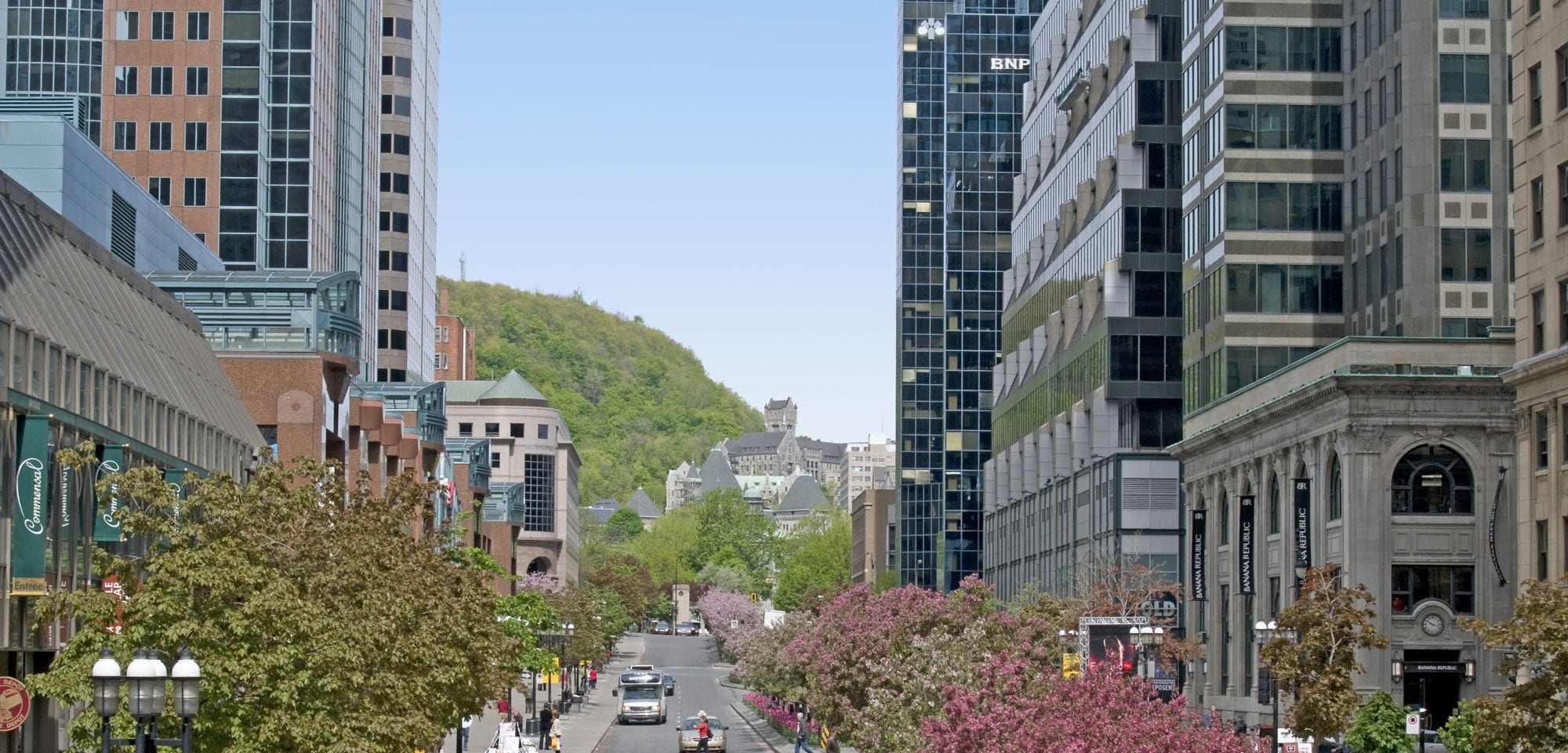
The article referred to McGill University, the Ritz-Carlton and the Montréal Museum of Fine Arts as features of the surrounding setting. It also mentioned streets such as Crescent and Drummond. These references explain the location argument; they do not establish an exact development boundary or the permitted form of a building.
Its price examples were one-bedroom units at $800,000 or more and penthouses above $1.5 million. The article did not identify the underlying comparable transactions or a consistent sample. Treat those figures as the publication's examples, not as a present valuation or proof of demand at a proposed selling price.
Four assumptions behind the development thesis
- Demand and limited space. The article anticipated interest in upscale units and argued that a constrained location could make a new project stand out. It did not provide a measured vacancy, absorption or presale series for the district. The premise would need to be tested against dated comparable projects and the units actually competing for buyers.
- Heritage and prestige. The article suggested that the area's history could support a project's positioning. Its claimed 5-7% annual appreciation was unsupported by a named dataset and is retained here only as the article's 2025 projection. It is not used to predict appreciation or calculate a project's return.
- Rates and project conditions. The article expected financing conditions to support buyers. That expectation was not a lender commitment. Neither the location nor a financing outlook establishes zoning, building height, heritage approval or eligibility for an incentive. Confirm those matters for the site before relying on a design or budget.
- Amenities and pricing. Pools, rooftop lounges and smart-home features were proposed as ways to position a luxury product. The article projected rents of $4,000 or more per month or sales around $1,000 per square foot, without a documented comparable sample. Those are scenario inputs to investigate, not prices a project can assume it will obtain.
Design and marketing ideas from the article
The original suggestions included presenting the district's history alongside contemporary design and considering amenities such as a cinema, golf room or concierge technology. These were ideas for a proposed product. Their suitability depends on the building, audience, acquisition cost and ongoing operating expense.
A feature should be evaluated through its cost, maintenance and likely use. An attractive marketing narrative cannot resolve a planning restriction or demonstrate that the added expense will be recovered. Any historic venue suggested for an event also requires its own booking and permission; no arrangement was established by the article.
The article's 2025 projection
The article imagined a 20-unit luxury tower producing $20-30 million in sales and rental yields above 4% if retained. It supplied no project-specific land cost, construction budget, financing terms, operating statement or yield definition. Those omissions prevent the figures from establishing profit, net yield or feasibility.
A gross sales total is different from the funds left after land, construction, professional work, financing, taxes and selling costs. Likewise, rental revenue is different from income after vacancy, common services, repairs and other expenses. Review the definitions and assumptions before comparing a development scenario with another investment.
Use the municipality and qualified project advisers to establish the site's permitted use, design restrictions and required approvals. The historical projections do not provide those answers.
Related reading: more recent articles.