
Evaluate and finance a plex
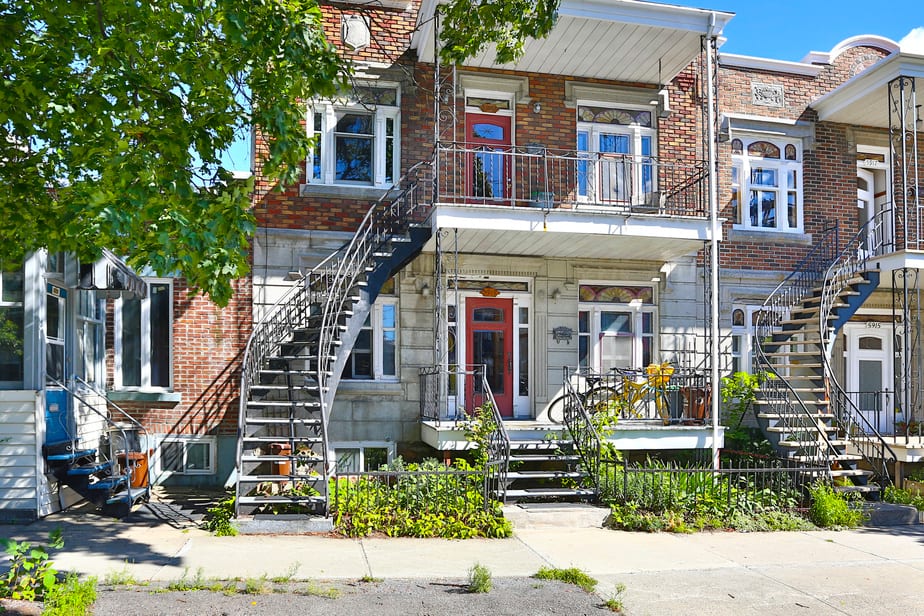
A plex is a building with several dwellings: a duplex, triplex, fourplex or more. In Montréal, it can be both a home and a source of rental income. But buying a plex also means becoming the owner of dwellings, often with tenants in place, and taking on the obligations that come with them.
This guide sets out a method for evaluating a plex before you make an offer: clarify your plan, understand the financing, read the leases and income, establish the actual expenses and prepare the inspection. It is general information and is not investment advice. Have your lender confirm the financing terms, and a notary or lawyer confirm the legal questions.
Living in it or investing: clarify your plan
Before looking at the numbers, decide what you want to do with the building. Your plan changes how you analyze it.
| You want to live in one unit | You are buying to rent | |
|---|---|---|
| What matters first | The unit you will occupy, and whether it is vacant | Actual income, expenses and the building's condition |
| Key question | Is the unit you want vacant, occupied by the seller or leased? | Are the rents set in the leases actually being collected? |
| Financing | Your occupancy can affect the terms: to be confirmed | The terms for a rental building are to be confirmed |
| Management | You live on site, with your tenants | You manage it yourself or hire a manager |
If the unit you want to live in is leased, the lease continues with the new owner. Repossessing a dwelling is possible in certain cases, but it follows rules set by law, with specific notices and deadlines, and the tenant can object. The Tribunal administratif du logement explains the rules on repossession of a dwelling (page in French). Do not build your plan around a repossession without legal advice.
Financing a plex

The down payment and the number of units
The down payment required for a plex depends in particular on the number of units, whether you will live in the building, and the rules of the lender and the mortgage insurer. The requirements are not the same for a duplex you live in as for a building you buy only to rent out.
For a larger building, ask the lender which financing approach fits the actual project. Canada Mortgage and Housing Corporation (CMHC) presents its mortgage loan insurance for standard rental housing, checked on 22 November 2026. This particular program requires at least five rental units, along with other project and borrower conditions. Total unit count alone does not determine eligibility; have the terms confirmed for your file.
How much rent is counted
A lender may take part of the rental income into account when reviewing your application. How much is counted, and how it is calculated, varies with the lender, the number of units and your occupancy. Ask which documents they will require: leases, rent roll, proof of collection, income and expense statements.
For a first idea of your budget, you can estimate how much you can borrow, then have your lender or mortgage broker confirm the result. The calculator estimates a loan from a payment budget, rate and amortization; it does not assess income, debts or mortgage qualification.
Reading the leases and the income
Units, leases and rents collected are not the same
The number of units does not tell you how many leases are in force. A unit can be leased, occupied by the seller or vacant. For each unit, establish:
- whether it is leased, owner-occupied or vacant;
- for a leased unit, the rent, the lease end date and what is included, such as heating, electricity, appliances or parking;
- whether the rent set in the lease is actually paid, and since when.
A lease sets a rent, but it does not guarantee that the rent will be paid. Distinguish the rents set in the leases from the rents actually collected, and ask for proof of collection.
Displayed income and actual income
The income shown on a listing may be actual or potential income, and it does not always reflect vacant units or unpaid rent. Check it against the leases in force and the actual occupancy of each unit.
What you take over with the building
When you buy a rental building, you take over the current leases, with their terms. The Tribunal administratif du logement explains what acquiring a rental building involves (page in French). Ask the seller whether any files are open before the Tribunal, whether lease modification notices have been sent, and whether there are special arrangements with any tenants.
Establishing the actual expenses
A plex's expenses are read from bills, not from general estimates. Ask for the last few years of:
| Expense | Document to ask for |
|---|---|
| Municipal and school taxes | Tax bills |
| Building insurance | Policy and current premium |
| Electricity and heating paid by the owner | Bills |
| Maintenance and repairs | Invoices and a list of work done |
| Snow removal, upkeep of common areas | Contracts |
| Management, if any | Management contract |
These are operating expenses. Keep two other amounts apart from them: a reserve for replacing major components, such as the roof, windows, heating and plumbing, based on their age and condition; and an allowance for periods when a unit might be vacant or rent might go unpaid, which reduces income rather than adding to expenses.
The analysis worksheet
Use this worksheet to do your own analysis from the documents you obtain. It contains no amounts. It is not investment advice.
The formulas to keep in mind
Keep three kinds of amounts separate: operating income and expenses, the cost of financing, and reserves for major work.
- Annual rents in force = the annual rents set in the leases in force; a unit that is vacant or occupied by the owner adds nothing to this base
- Effective income = annual rents in force - allowance for rent you do not expect to collect over the year from those leases (arrears, or a unit that could become vacant)
- Net operating income = effective income - operating expenses
- Cash flow before tax = net operating income - debt service (annual mortgage payments)
- Reserve for major work: tracked separately, for replacements such as the roof or windows; it is not a routine operating expense
Use the same twelve-month period for every line. Do not deduct a unit that is already vacant a second time: it is already absent from the base.
Net operating income describes the building itself, before financing. Debt service depends on your loan, not on the building.
Income
Add one row for each actual unit in the building: the example shows four rows, but a building with five or more units needs more.
| Unit | Status (leased, owner-occupied, vacant) | Annual rent set in the lease | Rent actually collected over the last 12 months | Lease end |
|---|---|---|---|---|
| Unit 1 | ||||
| Unit 2 | ||||
| Unit 3 | ||||
| Unit 4 | ||||
| Annual rents in force | ||||
| Allowance for rent not expected to be collected | ||||
| Effective income |
Annual operating expenses
| Item | Source | Amount |
|---|---|---|
| Municipal and school taxes | Tax bills | |
| Insurance | Policy | |
| Energy paid by the owner | Bills | |
| Routine maintenance and repairs | Invoices | |
| Snow removal and upkeep of common areas | Contracts | |
| Management, if any | Contract | |
| Total operating expenses | ||
| Net operating income (effective income - operating expenses) |
Financing
| Item | Source | Amount |
|---|---|---|
| Price | Promise to purchase | |
| Down payment | Lender | |
| Annual debt service (mortgage payments) | Lender | |
| Cash flow before tax (net operating income - debt service) |
Reserve for major work
| Component | Source | Amount to set aside each year |
|---|---|---|
| Roof, windows, masonry, balconies | Inspection report | |
| Heating, plumbing, electrical | Inspection report |
Then compare the cash flow before tax with the reserve for major work. If the result only works with optimistic assumptions, take the time to discuss it with your lender and your broker before you make an offer.
Questions to ask the seller
Before you make an offer, ask these questions in writing and keep the answers on file:
- Which units are leased, which are vacant, and which one does the seller occupy, if any?
- Are the rents paid on time? Are there any arrears?
- Have rent increase or lease modification notices been sent for the next renewal?
- Are there any current or recent files before the Tribunal administratif du logement?
- What work has been done in recent years, with which invoices and permits?
- Are there known problems with water infiltration, plumbing, heating or neighbours?
- What verbal or special arrangements exist with tenants, for example for parking or storage?
The answers do not replace the documents. They help you know what to check during your condition deadlines.
Inspecting a plex
Inspecting a plex takes longer than inspecting a house, since there are several units to visit. Plan access to each unit, respecting the tenants' rights and the notices required. Points to watch:
- the roof and envelope: age of the roof, condition of the masonry, balconies and exterior stairs;
- plumbing: materials, pressure, signs of leaks, water entry;
- electrical: panels, meters, capacity for the use of each unit;
- heating: type of system per unit and who pays for it;
- basement and foundations: moisture, cracks, drainage;
- safety: smoke detectors, exits, guardrails.
Read the report with your broker and, if needed, have a point checked by a specialist before the inspection condition deadline.
After the purchase: managing the building

Owning a plex is ongoing work. You will collect rents, answer tenants' requests, handle repairs, renew leases and keep records of income and expenses for your taxes. Decide before you buy whether you will manage the building yourself or hire a manager, and include that choice in your analysis. Keep every invoice and every written exchange with tenants: they will be useful when you renew leases, and when you sell one day.
Browse plexes for sale
To see the buildings available, browse the plex and multiplex listings. For a specific area, our guides explain buying a duplex in Saint-Léonard or buying a triplex in Saint-Léonard.
Already an owner and thinking of selling? See how selling a plex works with a well-prepared file of income and expenses.
Speak with Mario
Mario Conte, a real estate broker since 1998 with RE/MAX Action, helps you read a plex's leases, income and expenses before you make an offer.
Speak with Mario or call him at (514) 894-9400.